Simon Schryer
b. 4 Sept 1781
d. 25 May 1870
Married: circa 1802
Phoebe Schryer (nèe Walker)
b. 1788
d. 2 Feb 1824
My mother, Diane Fichter, Jeremy Schryer of Ontario and Mike Schryer of Nepean, Ontario have all done substantial research on Simon, Simon’s brother Abraham, and many generations of Simon’s descendants. This chapter is a result of their work. Mike’s compilation of facts and documentation is attached. It was Mike who contacted first my Uncle Norm and then Diane in his attempt to learn more about Joseph’s descendants. Finally, when I got ready to collect materials for this work, I contacted him. He has been extremely generous with his time and research. I have written just a few pages about Simon to put Mike’s documentation into easy-to-read prose. To give perspective to the time in which Simon lived, I have researched and provided political, economic and military history of the time.
Simon
Simon, Nicholas’s first son and our ancestor, was born on 4 Sept 1781 in Schaghticoke, New York. He moved with his family to Vermont by the time he was nine. At the age of 19, in the 1800 census, he was listed as the head of his own household. Shortly after this, land records show that he was disposing of property.
No U.S. land records have been found for his younger brothers but that doesn’t mean that none exist. Many local historical records have not survived, have not been digitized, or are not available to researchers. Primogeniture, the practice by which the oldest son inherits all of his parents’ wealth, was not the law of Vermont at this time although it was a common custom (author’s communication with Bob Murphy of the Vermont Historical Society, March, 2009).
In 1803, when the Lewis and Clark expedition began, and the time period in which the brothers were immigrating to Canada, two-thirds of Americans lived within 50 miles of the Atlantic. In Highgate, the Schryer family was approximately 400 miles inland. The brothers were to move nearly 600 miles inland in Canada.
Highgate had grown between 1790 and 1800 to a population of 437, an increase of over 400% from when Nicholas and Mary moved there. In the next census, 1810, there were no Schryers in Highgate. At least two of the boys, Simon and Abraham, had moved to Canada. We don’t know what happened to the other adults or children that were living in the household in 1800.
Simon’s first wife, who was born in Vermont, was Phoebe Walker. Simon’s marriage to Phoebe occurred when she was quite young. If our record of her birth year is accurate her first child was born when she was 14 or 15 years old.
Simon and Phoebe’s son Joseph, our ancestor, went on to name two of his children after his mother’s family: a son named Davison Walker Schryer, born 15 June 1849 and a daughter, Phoebe, born 5 March 1852.
Our Family
See Mike Schryer appendix for documentation
Simon and Phoebe had at least six children. According to Canadian census records at least the first two, Orange (1802) and Heman (1806), were born in Vermont. Their third son, Alanson, was born in 1810. This is the first instance of the name Alanson that appears in our family tree, but its origin is unknown. Simon and Phoebe next had a daughter, Mary Anne, born in Montreal in 1812; she died five years later. Our ancestor Joseph was born next, in 1815, and their final child, Simon Jr., was born between 1821 and 1824. Phoebe died in 1824 at about the age of 36.
Simon went on to have two more wives – Sarah Aries and Salome McCloud – and six more children. In the 1851 census, Simon was found living next door to his son Joseph.
Simon’s brother Abraham remained close to Montreal throughout his adult life. Abraham married in August of 1816 at the Notre Dame Cathedral in Montreal; on the day before his wedding he converted to Catholicism. He recorded his occupation at the time of marriage as shoemaker and in subsequent records of his life he reported his occupation as a laborer. He and his wife Angelique Bonneau went on to have seven children, three of whom, all boys, lived into adulthood. They lived in Ile Perrot, Quebec, about 39 kilometers from Montreal and 110 kilometers from Simon in the Petite-Nation. They have many descendents in Canada and the United States today.
The War of 1812
Let’s look at the conflict following the Revolutionary War from Canadian eyes. In the War of 1812, the United States fought the British on Canadian soil. They expected not only the help of Canadians but also to secure Canadian lands for the United States. For obvious reasons, Canadians objected. Invading American General William Hull issued the following unheeded pronouncement:
Inhabitants of Canada! The army under my command has invaded your country, and the standard of the United States now waves over the territory of Canada. To the peaceable, unoffending inhabitants, it brings neither danger nor difficulty. I come to protect, not to injure you. The United States offers you Peace, Liberty and Security. Your choice lies between these and War, Slavery and Destruction. Choose then, but choose wisely.
An army of the British, Native Americans and French Canadians captured Detroit in response, then Fort Dearborn (now Chicago). The war continued for several more years, but in the final peace agreement between the U.S. and Britain, borders were returned to their pre-war configuration and Canada lost no territory to the United States.
Simon’s brother Abraham served as a private in the armed forces in the 5th Battalion, Embodied Militia of Lower Canada and his company was present at the Battle of Chateauguay. During that battle, 4,000 U.S. troops attempted to capture Montreal, but were repulsed by over 1,600 Canadian and Mohawk forces.
1837 – 1867: From Louis-Joseph Papineau to Responsible Government to Confederation
Morton, D. (2001). A short history of Canada. Toronto: McClelland & Stewart Ltd.
Riendeau, R. (2000). A brief history of Canada. New York: Facts on File.
Initial editorial review of this section by Ann Lawson. All errors remain mine.
In January 1822, Simon bought land in the Petite-Nation of the Ottawa River Valley, an area rich in timber. Work in this industry stayed in the family. According to U.S. census records, many of Simon’s children and grandchildren went on to work in saw mills and as saw cutters in and around Flint, Michigan. Many of Simon’s descendants, including those in our line, report being born in Papineauville, a town within the Petite-Nation of Quebec, Canada.
There is an historical reference to Simon Schryer working at a mill in Papineauville in a letter from D. B. Papineau to Louis-Joseph Papineau. Louis-Joseph Papineau is an important figure in Canadian history.
A charismatic speaker, he was from Lower (French- and English-speaking) Canada, and was an influential political figure in the early- to mid-19th century.
He was a member of Canada’s elite and espoused a form of U.S.-style democracy promoting control of local Canadian matters by Canadians. In the latter part of the eighteenth century, oligarchic power functioned through a series of British-appointed governors and their chosen advisors in Lower Canada. The Constitutional Act of 1791 granted political representation to French Catholic citizens. The political factions split along cultural and religious lines, just as the society was split.
French-speaking moderates were afraid that Papineau’s support in the 1820s and 30s of a U.S.-style democracy would eventually lead to French cultural annihilation. Regardless, Papineau scored a decisive victory in Lower Canadian elections in 1834. He sought, through political means, to wrest financial control of the region from the British and was unsuccessful.
In Upper (English) Canada, political unrest was also afoot. In Upper Canada it was the Family Compact that ruled – a clique made up of the Tory elite. They feared the immigration of additional British settlers. This ruling body insisted that the new arrivals were unfit for office. They met their match in William Lyon MacKenzie, a Scottish immigrant and newspaperman who became a leading reformer.
In 1836-37 there was a world-wide recession that exacerbated tensions in both Upper and Lower Canada and led to the Rebellion of 1837. It was led in Lower Canada by Papineau and in Upper Canada by MacKenzie. Both men fled to the United States during the Rebellion. Both were later pardoned by Britain and returned to Canada. The two were even re-elected to parliament but the days of their political influence had passed.
Responsible Government
After the Rebellion of 1837, Britain sent Lord High Commissioner Durham to report on the situation in Canada (Morton, p. 48-49). His analysis of the situation had far-reaching consequences. He found the French-speaking areas “a doomed race destined to be absorbed by a superior British culture.” That’s exactly what he attempted to achieve. He proposed establishing a form of representative government whereby the greater numbers of English-speaking Canadians would eventually wipe out French culture.
The British rejected this proposal and established a representative government where English- and French-speaking Canadians of Upper and Lower Canada would have an equal number of representatives. When the two areas, then to be known as the United Province of Canada, were brought together, the debt load of the English fell on the French. The two sides, which had never lived well together, set up against each other and became bitterly entrenched in inner political workings. This strategy worked well for Britain in many colonies.
The maritime colonies rejected this union as they were more independent and economically stable.
Lord Durham’s other important recommendation was the formation of a “responsible government in which the governor would secure the cooperation of the assembly in his policy by entrusting its administration to such as could command a majority.” In a phrase, it was limited democracy that still favored British influence.
Stumbling at first, this recommendation eventually became fact. Both sides of the Atlantic worked toward this end, although not always together or at the same pace or even for the same reasons. And different areas of Canada enacted responsible government at different times. There was, and remain to this day, fundamental regionalism based on heritage, religion, language, economics and geography.
Two acts of British parliament effectively ended the colonial period economically – the repeal of the Corn Laws of 1846 and the Navigation Laws of 1849. Breaking off these protective tariffs ended the economic system of “colony” and “colonizer.”
Canada’s story of independence was quieter than that of the States militarily, but just as effective. Canada ended its colonial status about 75 years after the U.S., but without a bloody war. Their internal cultural differences, historically based on the forms of colonization they experienced, continue to this day. However, they needed to act quickly and decisively, together, to protect their nation from the United States.
Confederation
The United Province of Canada was at a bitter stalemate. Nothing was getting done. They were still functioning under the system Britain had established whereby the English and the French had an equal number of representatives regardless of changing population.
With the end of British economic protection, the various areas of Canada sought markets for their goods in the U.S. and the Reciprocity Treaty was formed between the two countries in 1854. It was crucial to the Canadian economy. It was up for renewal in 1865.
But by 1865, in the midst of the U.S. Civil War, areas of Canada protected Confederate soldiers who launched raids into Vermont. Lincoln was furious and threatened military action. The U.S. announced that it would not renew the Reciprocity Treaty. Canada had few options. One was to capitulate to the United States. The other was to join together across significant areas of difference in order to rely on themselves and their own markets. They chose the latter.
Another crucial factor that influenced Canadian action was U.S. expansion into the West. The U.S. was colonizing the West and establishing states that entered the Union at an alarming rate. In order to protect their Western provincial areas, Canada needed a unifying political presence that protected them from encroachment by U.S. settlers. Canada worked to acquire these provincial areas from the Hudson’s Bay Company.
As important as politics and immigration, rail made it possible to unite Canada geographically, which meant the ability to move goods and people to create an economy which could support the various areas of Canada.
At the Canadian Confederation in 1867, John A. MacDonald, the first Prime Minister, worked toward an American-style British constitution to unify the various areas of Canada – Ontario, Quebec and the Western provinces. First came New Brunswick and Nova Scotia. Other provinces followed in subsequent years. Parliamentary government was established with a House of Commons, based on population, and a Senate.
In the Canadian constitution, the primary goals of the country were to “make Laws for the Peace, Order and good Government of Canada.”
Simon saw all of this.
Economics: Lumber History of the Ottawa River Valley
From: Lee, David. Lumber kings and shanty men: Logging, lumber and timber in the Ottawa Valley. Halifax, NS: James Lorimer & Company, 2006.
In many areas of Canada in the eighteenth and nineteenth centuries, the rich natural resources were stripped by absentee landowners in England, France, or other areas closer to the Atlantic. In the Ottawa River Valley, this was not the case. The mill owners, timber barons and lumber kings lived in the communities from which their wealth derived.
All in all, local workers and the communities they formed did well by the forest industry of the Ottawa Valley. It was not without its down-sides. Trees were cut with little thought to waste and the wasted timber, left to dry in the wilderness, was responsible for many forest fires. In addition, the Ottawa River was polluted by the mills. The benefits, however, were substantial. Without the forest industry, much of the Valley would not have been settled: the industry encouraged growth in farming, gave birth to towns and villages, and supplied communities with cheap materials to build their homes, barns, bridges and businesses. The industry provided jobs and fostered commerce. It stocked government treasuries with the funds needed to pay for the public works and services on which people depended. The forest products sold abroad helped keep Canada’s import-export accounts in balance. The industry attracted foreign capital to exploit the forests, yet most of the profits stayed at home.
Pioneer farmers in the Valley were fortunate to find a growing market for wood. Hardwoods such as oak, maple, ash and elm could be found throughout the Valley, but although they could bring good prices, they were always of secondary interest. Because of their greater density, hardwoods could not float for very long and thus were difficult to get to mill or market. Ottawa wood was used for the masts of British ships.
Among the earliest settlers, including Simon, were a significant number of people born in the Thirteen Colonies or the United States; these immigrants were prominent in founding such communities as Hull, the Petite-Nation, Merrickville and Burritts Rapids. Some settlers in the latter two towns were United Empire Loyalists, but, generally, Loyalists were not numerous for most had already taken lands elsewhere before the Ottawa Valley opened up to settlement. Simon’s immigration to the area does not indicate his political leanings one way or the other.
In 1846, most of Canada was seized by a frenzy much like what would be seen in the California Gold Rush three years later. A booming British economy led thousands of Canadians to seek their fortunes in timber. Battalions of men – farmers with little experience along with veteran shantymen – rushed into the woods. The British market, however, could not absorb the supply, and prices plummeted.
According to his son Joseph, our ancestor Simon died 25 May 1870, at the age of 88, still living in the Petite-Nation of the Ottawa River Valley. He lived through this entire era of Canadian history.
Papineauville and Lac Schryer Today
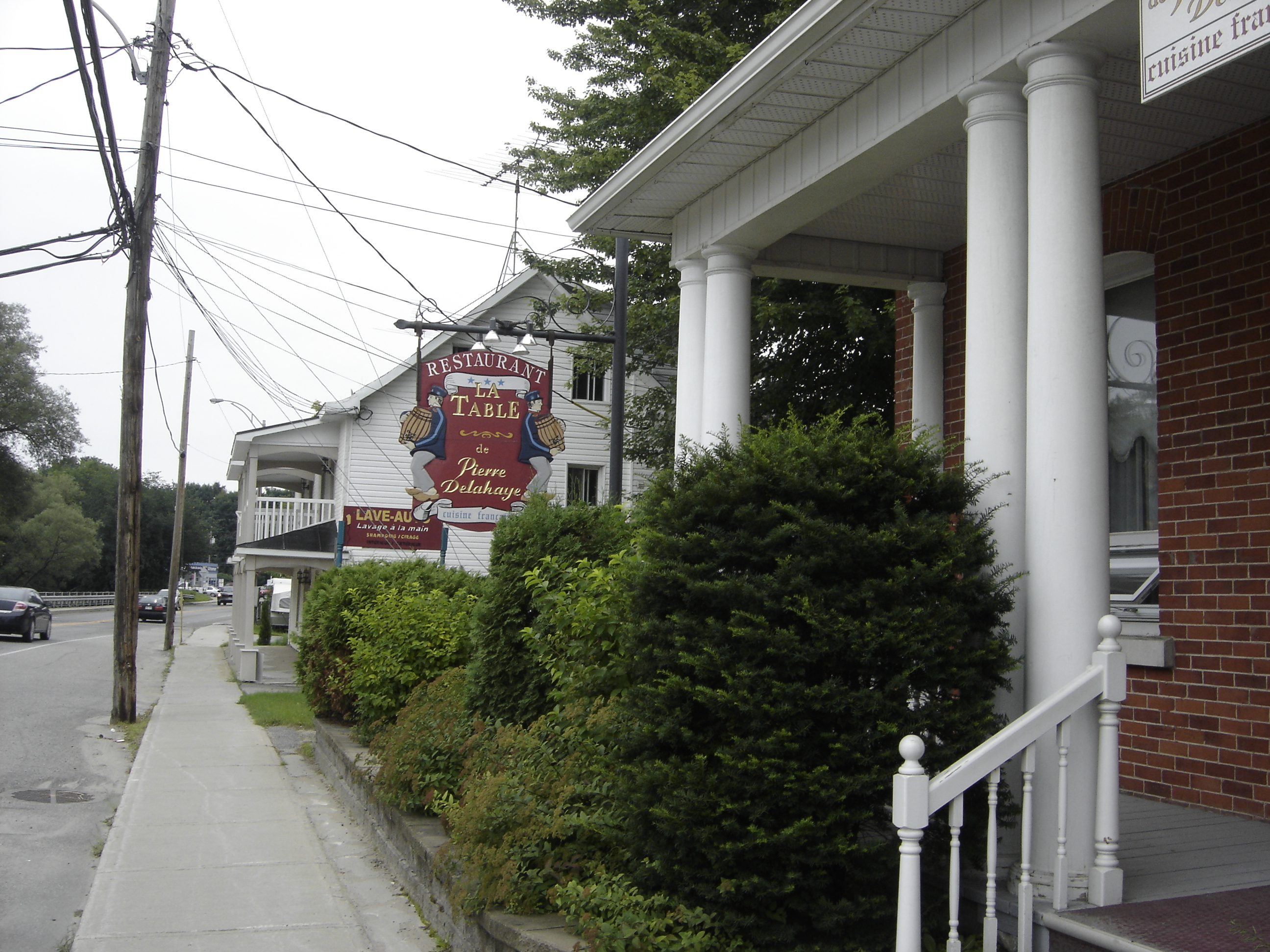
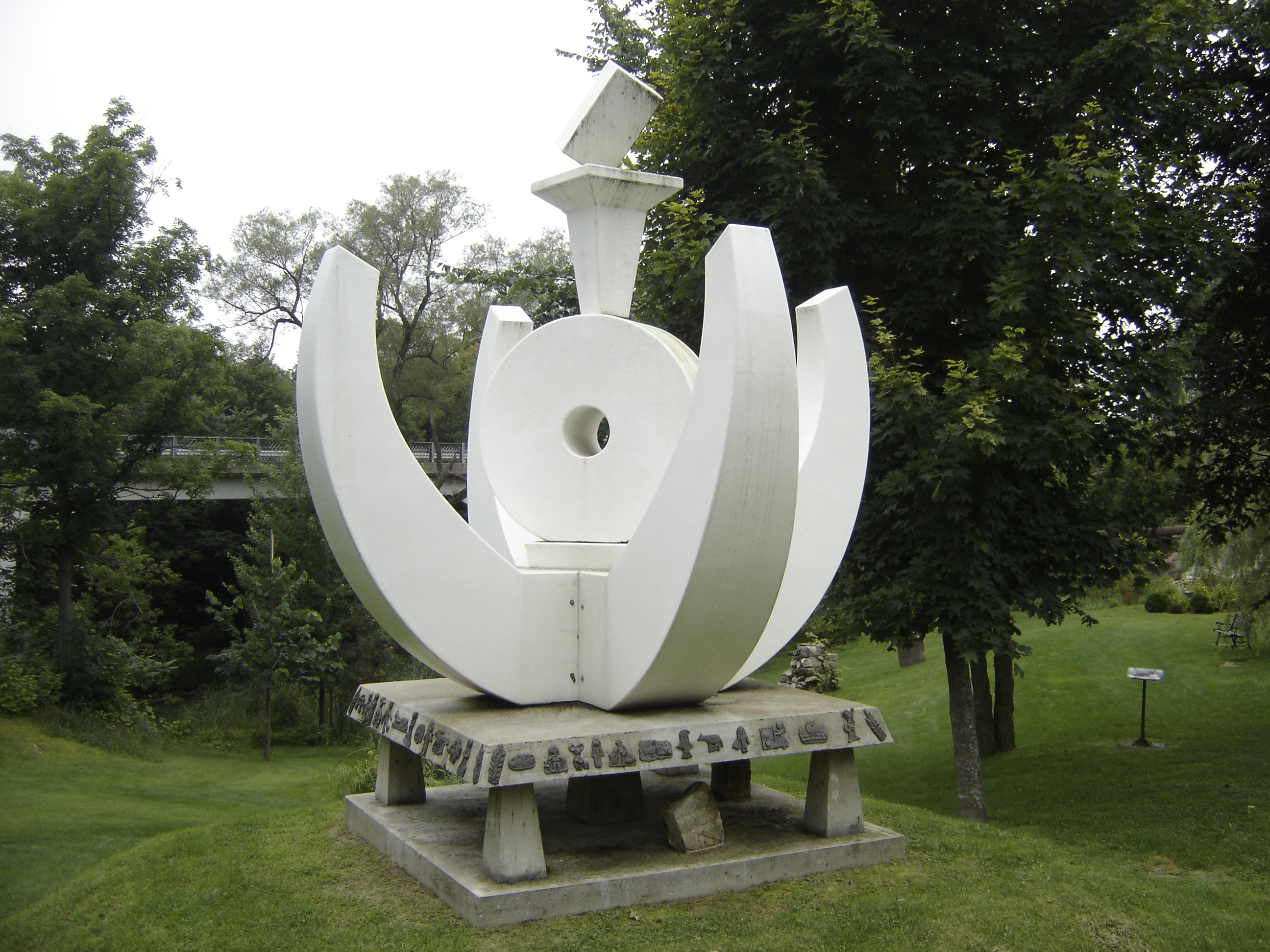
Ann Lawson of Ontario visited Papineauville and Lac Schryer, a lake a short distance from Papineauville, in July and August of 2009. Ann Lawson is related to the Schryer family through William Arthur’s mother-in-law Emmaline Wright (who married Francis B. Egan). Emmaline (Wright) Egan is the mother of “Grandma Schryer” (Emeline [Egan] Schryer).
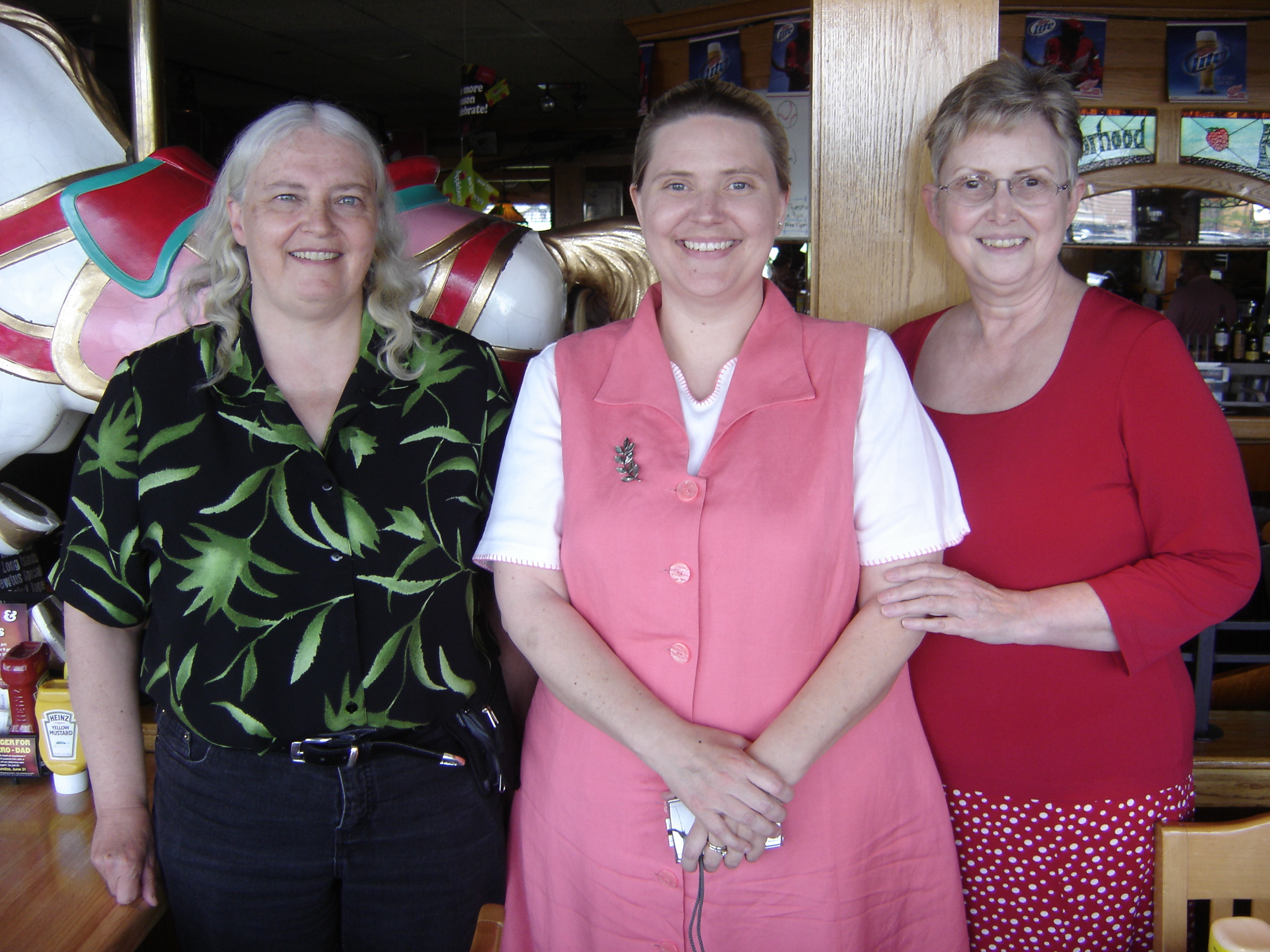
I had the distinct pleasure of meeting this third cousin once removed at a restaurant in Lansing, Michigan, where I live. She was driving through the general vicinity from Toronto on her way to Chicago and stopped to have a leisurely lunch with me and my mom and exchange family stories.
She is a seasoned and experienced genealogist. She gave me and my mother binders of family history information. Her notes are impeccable. She has photocopies of census, death and other records in neat, tidy groupings. She has little red dots next to pertinent information so you don’t have to slog through ancient, hand-written documents. She has carefully labeled photographs.
We had a good time and it was wonderful to meet someone whose knowledge of the family meets ours exactly (she knows one side, we know the other, with just one generation of overlap) but her references to her every-day knowledge of Canada terrified me into remembering how much I hadn’t learned about Canadian history at that point during this project.
Ann Lawson was extremely generous with her research and shared these photos of Lac Schryer and Papineauville.
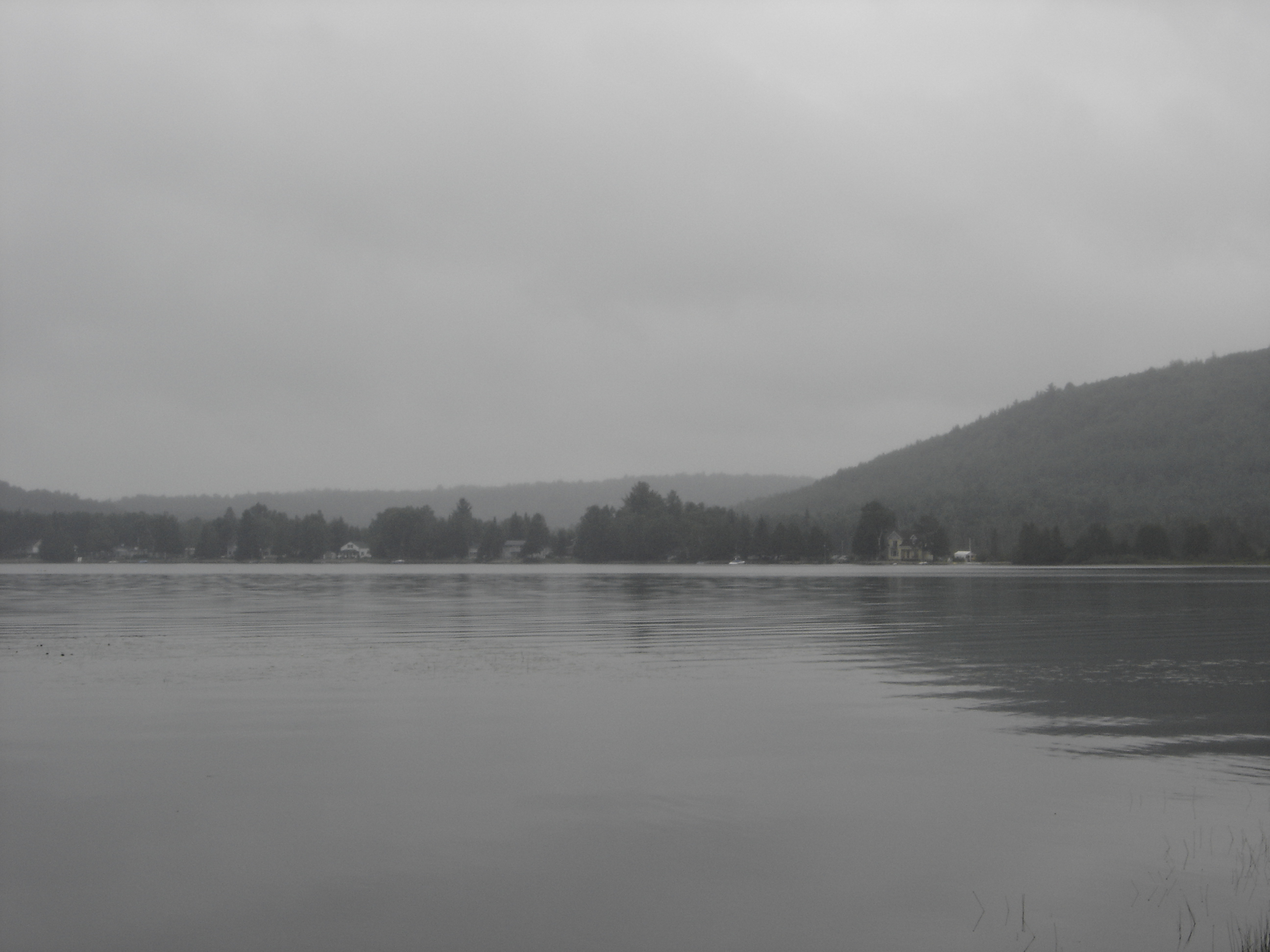
According to Mike Schryer:
“In the 1980’s [I] interviewed Mrs. Ethel Schryer Merkley; a daughter of Alanson Erwin Schryer and Edith Maria Chamberlin. She informed [me] that Scryer Lake was named for her father who was killed in the area in 1900.”
“Alanson Erwin Schryer, a son of Alanson Schryer and Almira Sarah Hillman had been the foreman of the W.C Edwards Lumber Company and lived in North Nation Mills (the area of Plaisance nowadays). He had recently moved his family to Ottawa when he died.”
“I once saw an obituary of his accident and death taken from the Ottawa Citizen, at the Ottawa Public Library but do not have a copy.”
Personal notes on writing about Simon Schryer:
So, had you (any of my state-side relatives) ever heard of Louis-Joseph Papineau, the process of Confederation, or the seigneurial system of New France? Well, I hadn’t until I wrote this.
Canadian history was hard to wrap my head around. Mainly, I think, because I didn’t know even the basics. Drop a random century of English history on me and I can generally figure out who was ruling, what was going on with religion, medicine, trade and imperialism.
Not so with Canada. It was all brand new. I couldn’t believe I was so ignorant. Canada is RIGHT THERE. RIGHT ON TOP OF US and I couldn’t even tell you the year of Confederation until I hunted it down. I didn’t even know it was called that. I am not proud of this.
It doesn’t help that I took two years of “French One” and never went on to “French Two.” I was a teenager and French was not much on my mind. But my early years with the language left me leery of it and during this project, when I needed to remember just basic names and spellings and phrases I was intimidated.
And I was not initially aware that so much of our family was, and is, Canadian. In my line we call ourselves Dutch. We were probably German. And in either case that was about two hundred and fifty years ago. My line was Canadian for a long time before we came to the United States. I couldn’t say if it’s “some” or “a lot” of Schryers that came to the United States. I can tell you that many, many, many stayed in Canada. And I can tell you that all of my mother’s paternal great-grandparents were Canadian. I don’t think my generation of Schryers in the U.S. realizes how very Canadian our family is.
But here we all are, with just a friendly border between us.
 Plum Librarian LLC